




Moretti S.p.A. is now a leading name in the distribution and manufacture of medical devices, mobility aids and healthcare solutions.
Through the words of the founders, Laura Cellai and Fabrizio Fabbrini, we retrace the key stages of an entrepreneurial journey characterised by vision, innovation and continuous growth. From its origins in pharmaceutical distribution to the development of a well-structured organisation, with in-house production, an international presence and a portfolio of over 5,000 products.
The origins of Moretti S.p.A.: how the company came into being
Do you remember day one? How did it all begin?
“The company was founded in response to a market need. The pharmacy supply system was very different from today’s: there were no large cooperatives and distribution was fragmented across small local warehouses.
Furthermore, there was a gap in the distribution service for over-the-counter products and non-medicinal accessories. This gave rise to the idea of developing a business capable of guaranteeing: immediate product availability and, above all, rapid delivery. This remains our key strength to this day.
Right from the start, the logistics model based on stock and immediate availability represented a decisive competitive advantage: pharmacies purchased on a ‘sold-as-you-go’ basis, and it was essential to guarantee prompt delivery so that they would not look elsewhere.”
How did the name Moretti come about?
“At the start, we had no capital. The support of Laura’s mother, Bruna Moretti, was crucial; she gave us the chance to get started, both financially and in terms of the paperwork.
As a trader, she registered the first sole proprietorship in her name, from which the current name Moretti derives. This decision allowed us to speed up the administrative process of setting up the business, enabling Laura to subsequently obtain her trading licence.”
How were things organised at the start?
“We did everything ourselves: from ordering stock to preparing orders, from invoicing to administrative tasks. It was a hands-on job.
There were no digital systems: the accounts were managed manually and we worked evenings and weekends too. It was a period of great commitment, but we’d do it all again without hesitation.
Despite the difficulties and sacrifices, the results achieved confirm the validity of the choices made and the model built up over time.”
Entry into the surgical and hospital sector
How did the expansion into the medical sector come about?
“It was a natural progression, driven by the market needs of the time.
The products we supplied to pharmacies were also used in hospitals, and this was later complemented by demand for clinic furnishings, surgical instruments and electro-medical equipment such as electrocardiographs.
So, in the 1980s and 1990s, we expanded our range by entering the surgical and hospital supplies sector.
This market, as well as being attractive, allowed us to achieve higher profit margins compared to over-the-counter products, helping to sustain the company’s growth.”
The turning point: mobility aids and international expansion
When did you decide to enter the mobility aids market?
“The introduction of aids for the elderly and people with disabilities was a strategic decision that developed over time. In the early 2000s, it was clear to us that this segment would see strong future growth, and orthopaedic and healthcare suppliers were beginning to request this type of product. However, we lacked the space to handle bulky products such as wheelchairs and walking frames.
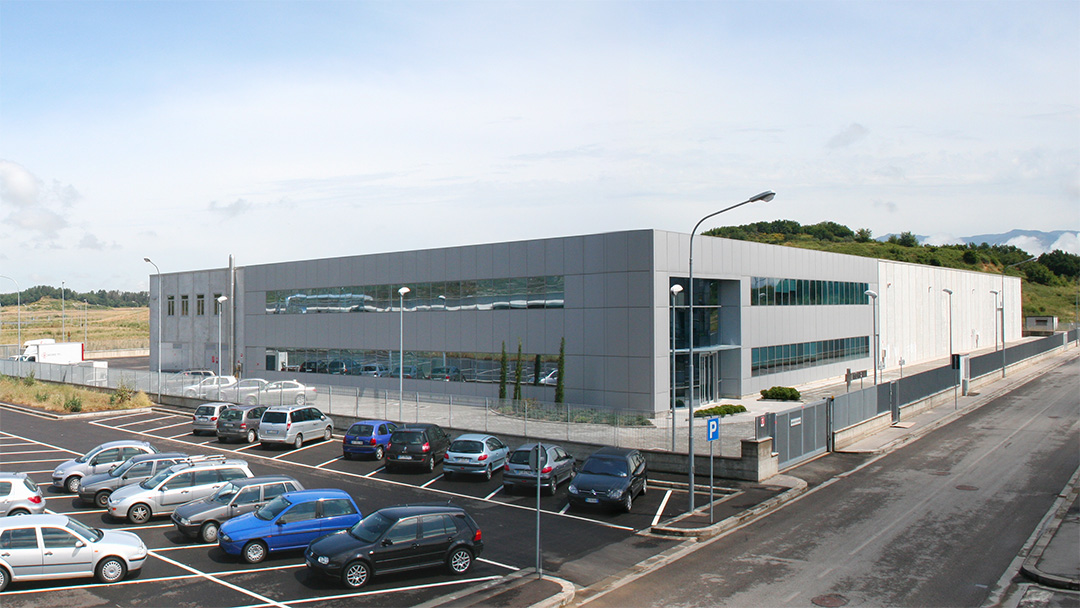
In 2004, with the move to our new 6,000 m² premises and the expansion of our logistics facilities, the company entered the market for aids for the elderly and assisted mobility solutions, which is now the core business of Moretti S.p.A.
A forward-thinking strategic decision, based on a key demographic trend in the healthcare sector.”
When did Moretti start looking to the international market?
“Our international expansion began as early as the late 1990s. Trade fairs were our main point of contact with international customers, contributing to our international commercial development.
Today we export to 37 countries, mainly in Europe, distributing over 600,000 pcs a year, many of which are ‘Made in Italy’ from the Moretti Industry division.”
Research, design and product development
Fabrizio, you were directly involved in the design process – what role does this play in the development of Moretti S.p.A.?
“I have always been personally involved in the design of medical devices. Conceiving, sketching and designing products has always fascinated me. I used to spend my evenings thinking about how to solve that joint or that actuator connection. Among these, I remember the shape of the first electronic blood pressure monitor, which was designed to have a distinctive shape.
In addition to design, the selection of solutions to be launched on the market also played a fundamental role. The selected products had to be distinctive, stand out from the competition and clearly reflect the identity of the Moretti S.p.A. brand.”
When did in-house production begin?
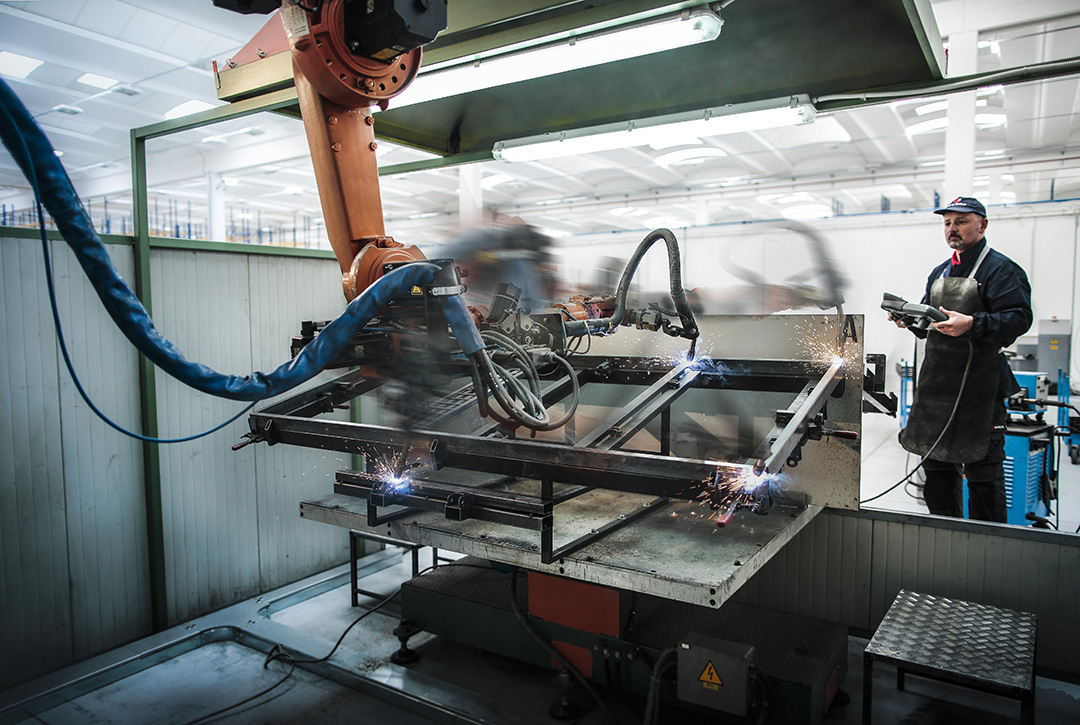
“We launched in-house production in 2013. This decision stemmed from the need to reduce development times and optimise costs associated with overseas production.
The production development process involved on-site visits to manufacturers, presenting projects and consulting with their technical staff, fine-tuning products, creating prototypes and making adjustments for production. Furthermore, we had to factor in the transport times and costs associated with bulky products, which ended up almost completely negating the economic advantage of overseas production compared to Italian production.
We had made several attempts to acquire companies that were ceasing operations, then one day, whilst talking to a regular supplier, the perfect opportunity arose. We acquired a company in Foligno that was winding down its operations, bringing both machinery and staff in-house. This allowed us to integrate manufacturing know-how into the company and to have direct control over production quality.
Today, production and the sales network work in synergy, creating a structural competitive advantage over competitors who focus on only one of these two aspects.”
Innovation and technology as a competitive advantage
What role has innovation played in the growth strategy?
“A decisive one. We’ve always been one step ahead.
Innovation has enabled us to support the company’s growth by improving operational efficiency. Over time, it has allowed us to computerise processes at an early stage and optimise the supply chain.
As early as the mid-1980s, we had computerised our accounting management, ahead of the market. Over time, we introduced integrated management software which, even today, allows us to manage orders and logistics comprehensively.
Furthermore, once we moved to our new premises, thanks to the rationalisation of storage and the optimisation of warehouse processes, we were able to double our turnover with the same number of employees, despite increasing our warehouse space from 500 m² to 6,000 m².
Innovation, however, would not be possible without people. That is why we have always placed great value on those who work with us, striving every day to instil the principles that set us apart: professionalism, integrity and a sense of responsibility.”
Challenges and key milestones in our growth
What was the biggest challenge you faced?
“The main obstacle to our growth was cash flow management.
As our business model is based on fast delivery, within 72 hours, we need to maintain substantial stock levels. This requires a significant amount of tied-up capital to facilitate the turnover of supplies.
In fact, our strategic choice has always been to reinvest profits to ensure financial independence and long-term sustainability. By the early 2000s, we began to enjoy greater financial stability.
Even today, our financial exposure and commitment remain very significant: as turnover grows, so does the need for storage and, consequently, the volume of resources tied up in stock.”
What moment do you remember as the most significant?
“16 August 2004, when the first invoice was issued at the new premises.
It was a decisive turning point for the growth of Moretti S.p.A. Although we experienced it in different ways: on the one hand, with enthusiasm; on the other, with a focus on sustainability.
For a short while, there was even the idea of renting out the unused part of the warehouse to address liquidity issues. Keeping the space, however, proved over time to be the right choice: a few years later, we had to expand the storage space further, adding another 5,000 square metres.”
The values that guide the decisions
What values guide you?
“We’ve never sat down and formally defined them. They’re the values that guide us in our daily lives: respect, integrity and dedication to our work.
Respect for everyone in the sector – customers and suppliers alike – is fundamental; it’s what keeps the system running. If someone tries to cut corners, the whole thing breaks down.
Over time, this approach has allowed us to build solid relationships and mutual trust with customers, suppliers and partners.”
What makes you most proud today?
“The strength of the brand. Consolidating it has been the result of a long journey. Today we have more than 5,000 items under the Moretti S.p.A. umbrella.
In the early 2000s, the company developed family brands, with the aim of creating product lines capable, over time, of gaining their own autonomy and generating potential future spin-offs.
Today, however, we are pursuing a new strategic direction: simplifying our range and bringing all products under a single, clear and instantly recognisable identity – that of Moretti S.p.A.”
The generational handover and the future of Moretti S.p.A.
How did you manage the generational handover?
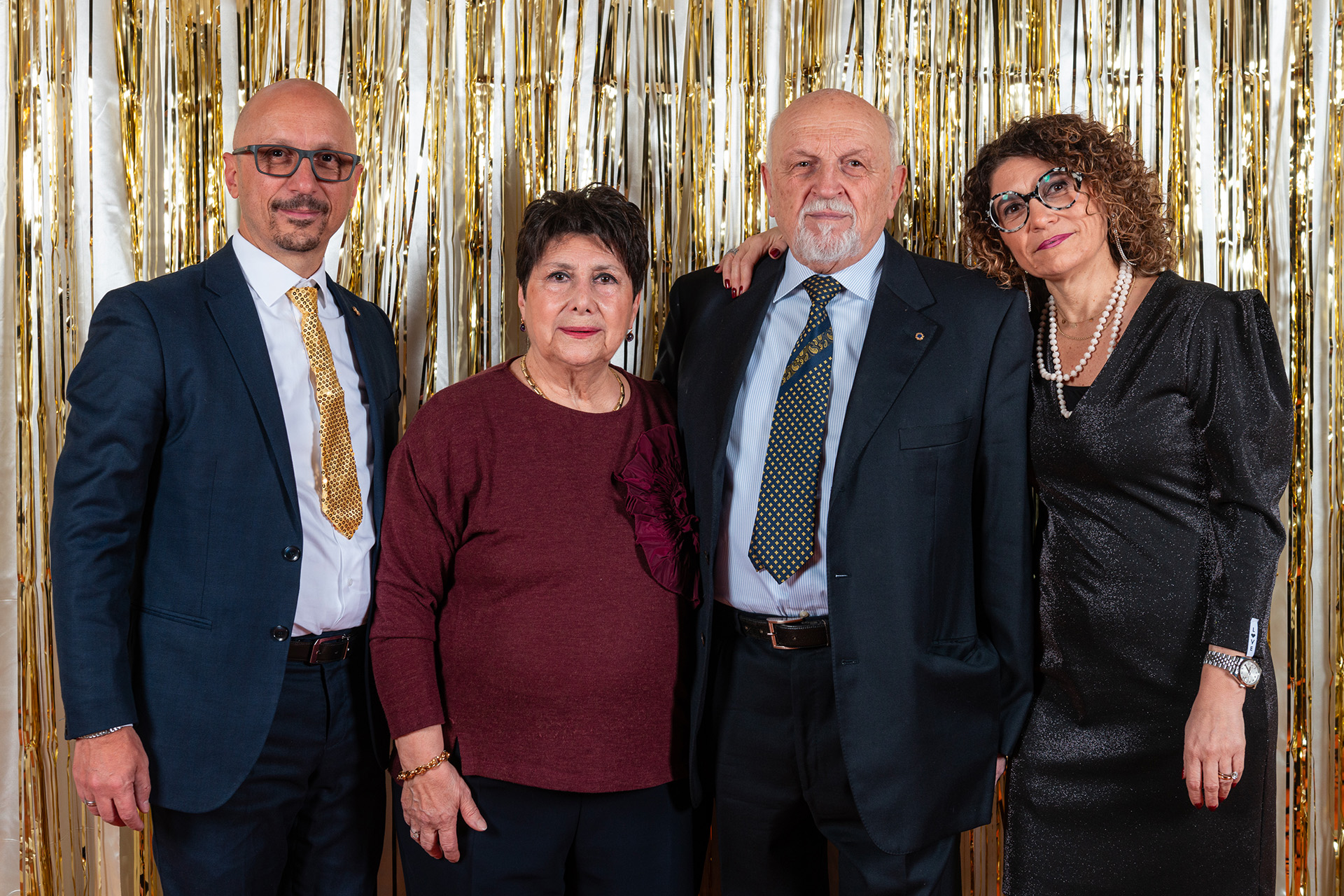
“The integration of our children, Chiara and Filippo, into the company followed a structured process that began in the mid-1990s.
From the outset, we felt it was important for them to get to know the company as a whole, not just in theory, but above all through direct experience of the various processes. For this reason, their training programme was cross-functional and covered all the main operational areas, enabling them to gain a practical understanding of how work is carried out within the company.
Only later did they embark on a path of specialisation in their respective fields. Chiara focused on the sales area, with an emphasis on customer relations and order management; Filippo, on the other hand, concentrated on the purchasing department, delving in particular into supplier relations and activities related to management control.
This path has allowed them to grow alongside the company, developing solid skills and a deep understanding of its structure and values. A natural evolution that has led them today to hold central roles in the company’s leadership: Chiara as CCO and Filippo as CEO.”
What are your expectations for the future of Moretti S.p.A.?
“Looking to the future and to the new generation at the helm of the company, we anticipate a leadership approach based on a cohesive internal generational continuity. The aim remains to maintain a solid and competitive position in the healthcare sector, further developing the business and building on the legacy established over 50 years of operation.”