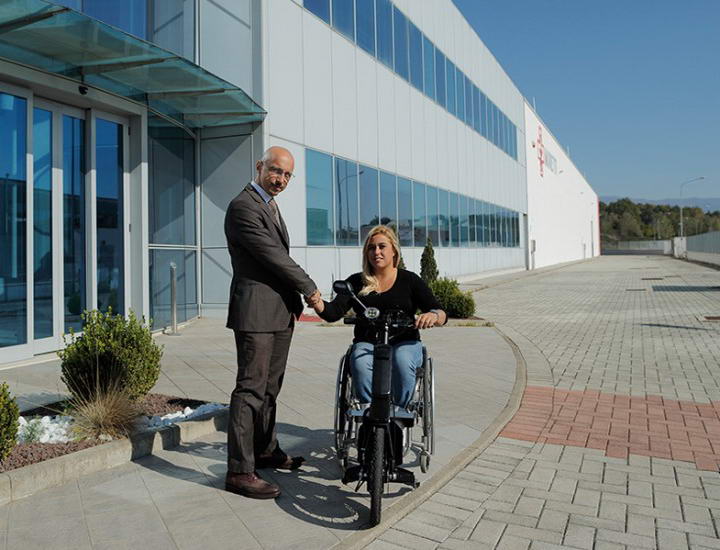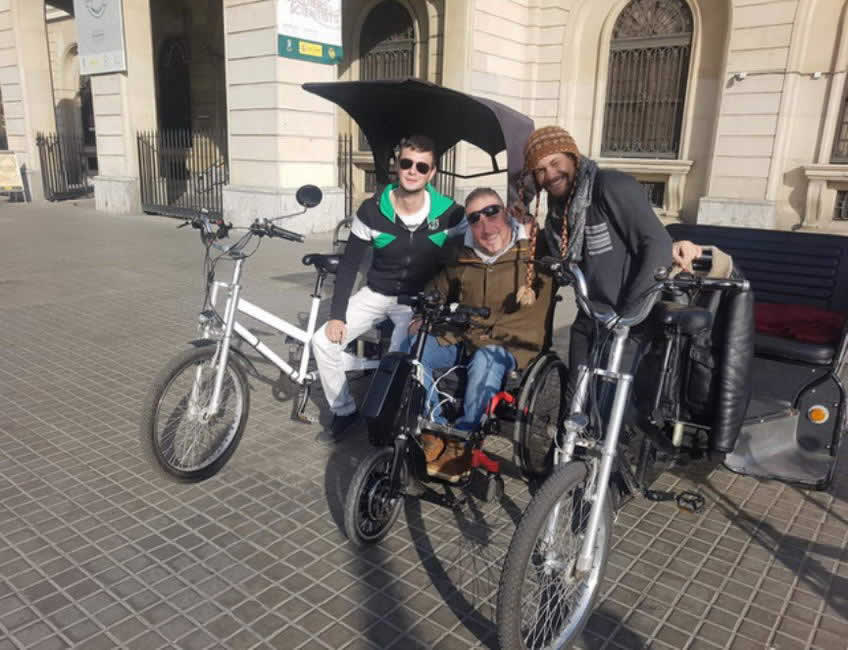





Summer is a wonderful time to spend more time with family, enjoy a change of scenery and focus on personal wellbeing.
For older people, a holiday can offer significant benefits: a break from the daily routine, more time with family, encouragement to be active, reduced stress and an improved quality of life. Contact with nature, physical activity and socialising can contribute to physical and emotional wellbeing even during the warmer months.
To ensure the experience is truly positive for everyone, it is essential to plan the trip carefully. With a few precautions and the right mobility solutions, even people with reduced mobility can enjoy the summer with greater peace of mind and freedom.
Before you set off: how to prepare for your holiday
Good organisation helps to prevent many difficulties once you arrive at your destination. Before you set off, it is worth checking:
- the accessibility of your accommodation;
- whether there are lifts or ground-floor rooms;
- that there are no architectural barriers;
- whether it is possible to hire any assistive devices locally.
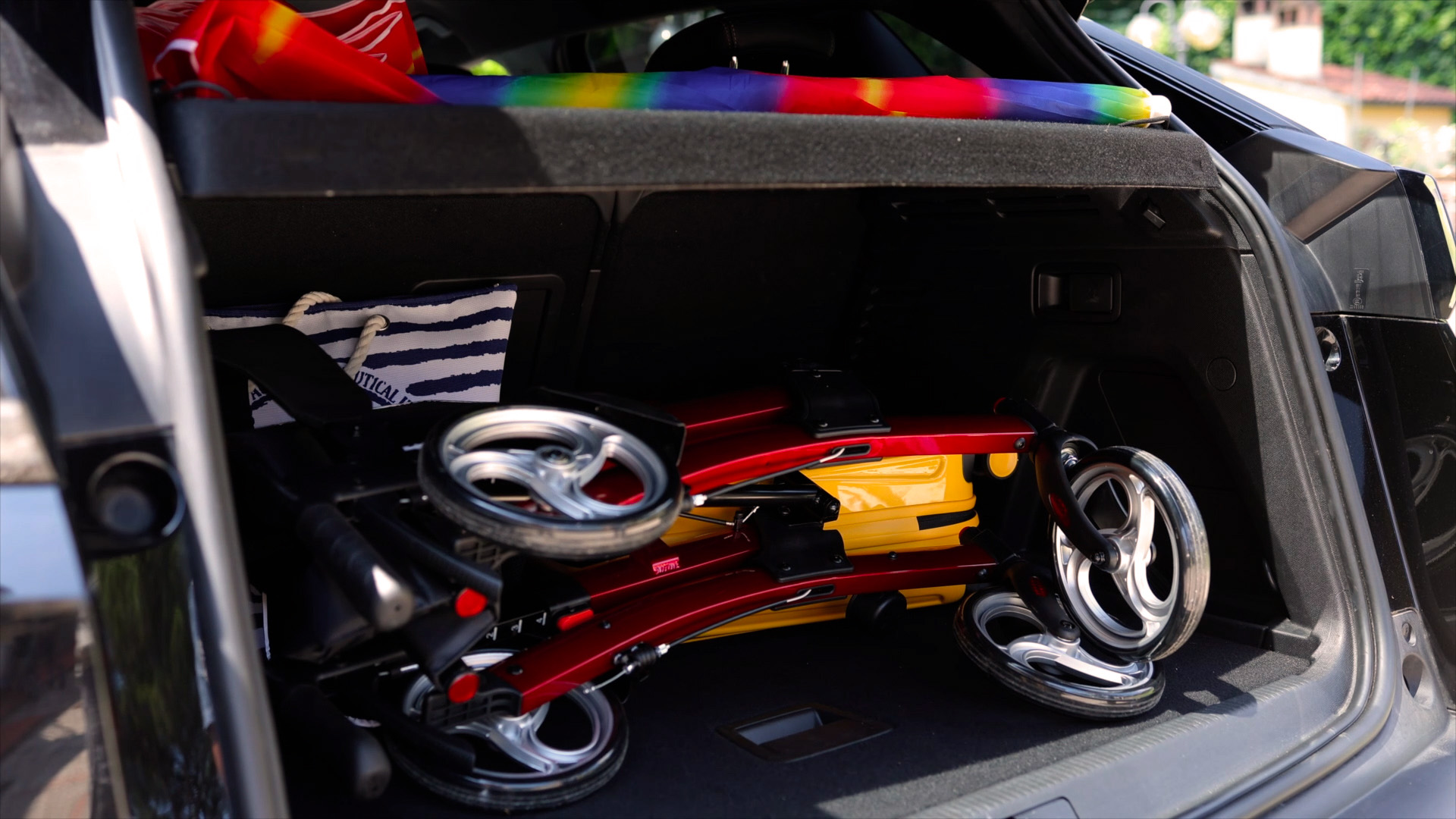
The means of transport also deserves attention: wheelchairs, walking frames and other aids must be easily transportable and foldable to facilitate transfer into a car or the chosen mode of transport.
How to choose an accessible destination
In recent years, many Italian resorts have invested in accessibility, making it easier to organise holidays for older people and trips for those with reduced mobility.
Well-equipped seaside resorts
In recent years, several Italian destinations have invested in making beaches and public spaces accessible. Resorts such as Jesolo (Veneto), Lignano Sabbiadoro (Friuli Venezia Giulia), Riccione and Rimini (Emilia-Romagna), Viareggio (Tuscany) and San Benedetto del Tronto (Marche) are known for having:
- beach establishments equipped with walkways;
- accessible toilets;
- beach chairs for people with disabilities;
- accessible pathways.
Mountains and accessible tourism
A number of Alpine and Apennine resorts, such as Alpe Cimbra, Madonna di Campiglio and the Adamello Brenta Nature Park, are also investing in the development of accessible services.
The following are becoming increasingly common:
- barrier-free walks;
- accessible ski lifts;
- trails suitable for people with reduced mobility;
- activities for people with reduced mobility.
Where to find information on destination accessibility
Before booking, it is useful to consult specialist websites that provide up-to-date information on accessible facilities and services.
Among the most useful resources:
- Village for All (V4A): a portal dedicated to accessible tourism with reviews and ratings of facilities.
- Handy Superabile: a project dedicated to barrier-free tourism.
- Bandiera Lilla: a website where you can find certified municipalities that invest in tourism accessibility.
Travelling safely during the summer
High temperatures, long journeys and changes to daily routines mean that older people need to take a few extra precautions.
1. Hydration, sun and heat.
As we get older, our sense of thirst tends to diminish. During the summer, it is therefore important to encourage proper hydration even when there is no sensation of thirst. It is also advisable to limit exposure to the sun during the hottest hours of the day, to stay in cool, well-ventilated environments, and to use appropriate protection such as hats, sunglasses and sun cream.
2. Swelling of the limbs and risk of blood clots.
In older people, the risk of swelling and poor circulation is higher during periods of prolonged immobility. During long journeys by car, train or plane, it is advisable to take regular breaks, walk around and encourage movement of the lower limbs.
Proper planning helps to make holidays safer for older people, reducing the risks associated with the heat, travel and changes to daily routines.
Mobility and comfort aids to take on holiday
When staying away from home, it is normal not to find the same level of comfort and support available at home. Taking a few aids with you can significantly improve your independence, safety and day-to-day well-being.
Everyday mobility: walking sticks and rollators
For walks along the seafront, visits to historic town centres or simply getting around, the right walking aid can make all the difference.
Walking sticks are a practical solution for those who need light support, helping to reduce fatigue and increase stability whilst on the move.
Foldable aluminium rollators offer stable and comfortable support for tackling longer distances safely. The integrated seat allows you to stop and rest along the way. They can also be easily transported in a car and stored away when not in use.
Greater independence on longer journeys
During a holiday, an elderly person may need assistance with more demanding journeys. A foldable electric scooter can be a practical solution for maintaining independence without sacrificing the pleasure of getting out and about and taking part in activities with family and friends.
Thanks to the fact that it can be easily dismantled and transported, the scooter can accompany the elderly person throughout their stay, offering comfort when travelling and greater independence in managing their daily routine.
Comfort and prevention during long periods of sitting
Long journeys by car, train or plane can cause muscle stiffness and discomfort in the neck and shoulders, particularly in older people.
A travel neck pillow, designed to provide proper support for the head whilst resting and to promote a more natural posture, can make a significant contribution to your well-being during the journey and whilst relaxing on holiday.
Safety and comfort in care homes
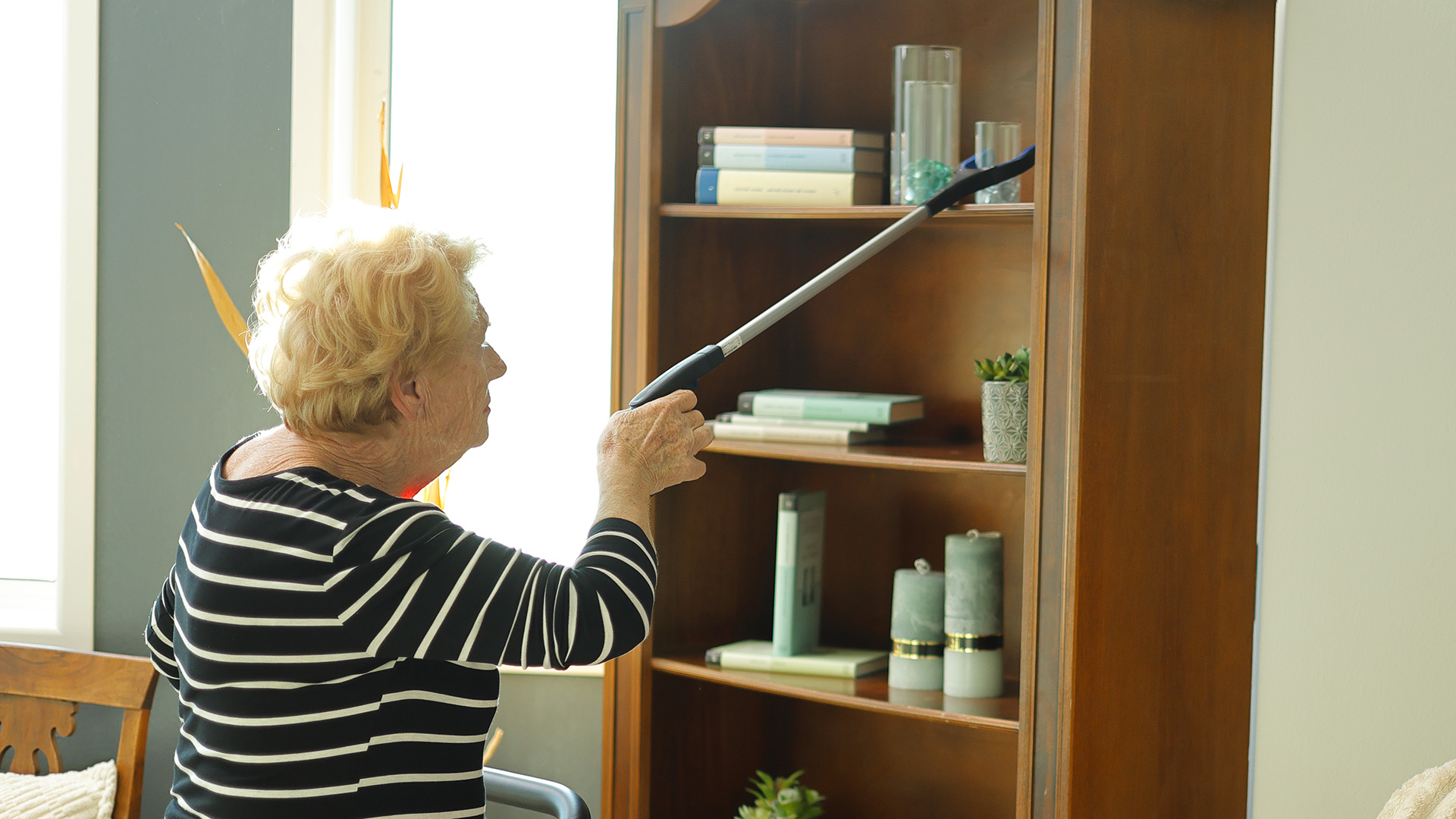
Care homes do not always offer the same levels of accessibility as one’s own home. Cramped spaces, inadequately equipped bathrooms or furniture that is difficult to use can make even everyday activities challenging.
Some easily portable aids help reduce the risk of falls and make daily activities easier:
Enjoying the summer with peace of mind
A well-organised holiday isn’t just about choosing a pleasant destination; it’s about creating the right conditions so that everyone can enjoy the experience in comfort, safety and as independently as possible.
With proper planning, accessible destinations and the aids best suited to their needs, older people too can continue to get about, take part in family activities and fully enjoy the time spent together. For carers and family members, this means enjoying the holiday with greater peace of mind and focusing on what really matters: sharing quality moments.