





Continuous or pulsed flow? What other factors should be considered apart from battery life and portability? An in-depth look at the main criteria for selecting oxygen concentrators, balancing therapeutic needs with the patient’s quality of life.
In long-term oxygen therapy, identifying the most appropriate device means striking the right balance between clinical needs, technical specifications and the patient’s daily routines.
When comparing two oxygen concentrators, there are usually three key questions: how many litres per minute does it deliver, how much does it weigh, and how long does the battery last? These are legitimate questions, but they are not sufficient on their own.
A stationary concentrator and a portable one may meet different needs, but they are not necessarily interchangeable. For this reason, the assessment must take into account all the technical specifications as a whole and, above all, compare them with the patient’s prescribed treatment.
Fixed or portable oxygen concentrator: it’s not just a question of size
The principle is the same for all of them: the concentrator draws in air from the environment, separates out the nitrogen and produces a mixture with a high concentration of oxygen. What differs, however, are the design features, power supply options and possible uses.
Fixed concentrators are generally designed for long-term home oxygen therapy. They operate when connected to the mains and are commonly used when a continuous supply is required, as prescribed by a doctor.
Portable concentrators, on the other hand, are designed to facilitate the patient’s mobility. Thanks to their battery power, they can accompany the patient whilst travelling and during activities outside the home, provided the device’s performance is compatible with their therapeutic needs.
1. Litres per minute do not tell the whole story
One of the first factors to consider is the method of oxygen delivery.
In continuous-flow systems, oxygen is delivered constantly, regardless of the respiratory cycle.
In pulse-flow devices, on the other hand, the concentrator detects the start of inhalation and releases a quantity of oxygen in time with the breath.
This difference is particularly important when evaluating portable oxygen concentrators.
A pulse setting does not automatically correspond to the same value expressed in litres per minute as a continuous-flow device. Performance depends, in fact, on the characteristics of the concentrator, the volume delivered per pulse and the system’s ability to correctly detect the start of inhalation.
It is therefore essential for healthcare professionals to ensure that the delivery mode is appropriate to the patient’s needs, even during daily activities.
2. Battery life: what to consider beyond the stated duration
For a patient who requires oxygen therapy whilst away from home, the battery life of a portable oxygen concentrator is an important factor.
However, the figure stated in the technical specifications must be interpreted in the light of actual conditions of use.
Battery life can vary depending on several factors:
- the selected flow setting;
- the patient’s respiratory rate;
- the condition and wear and tear of the battery;
- the device’s operating mode.
It is also worth checking the availability of additional batteries, mains adaptors and car charging systems, where provided by the manufacturer.
For those assisting the patient with their choice, the question should not only be ‘How many hours does the battery last?’, but also ‘For how long does the device allow the patient to carry out their daily activities in a way that is compatible with their prescribed treatment?’
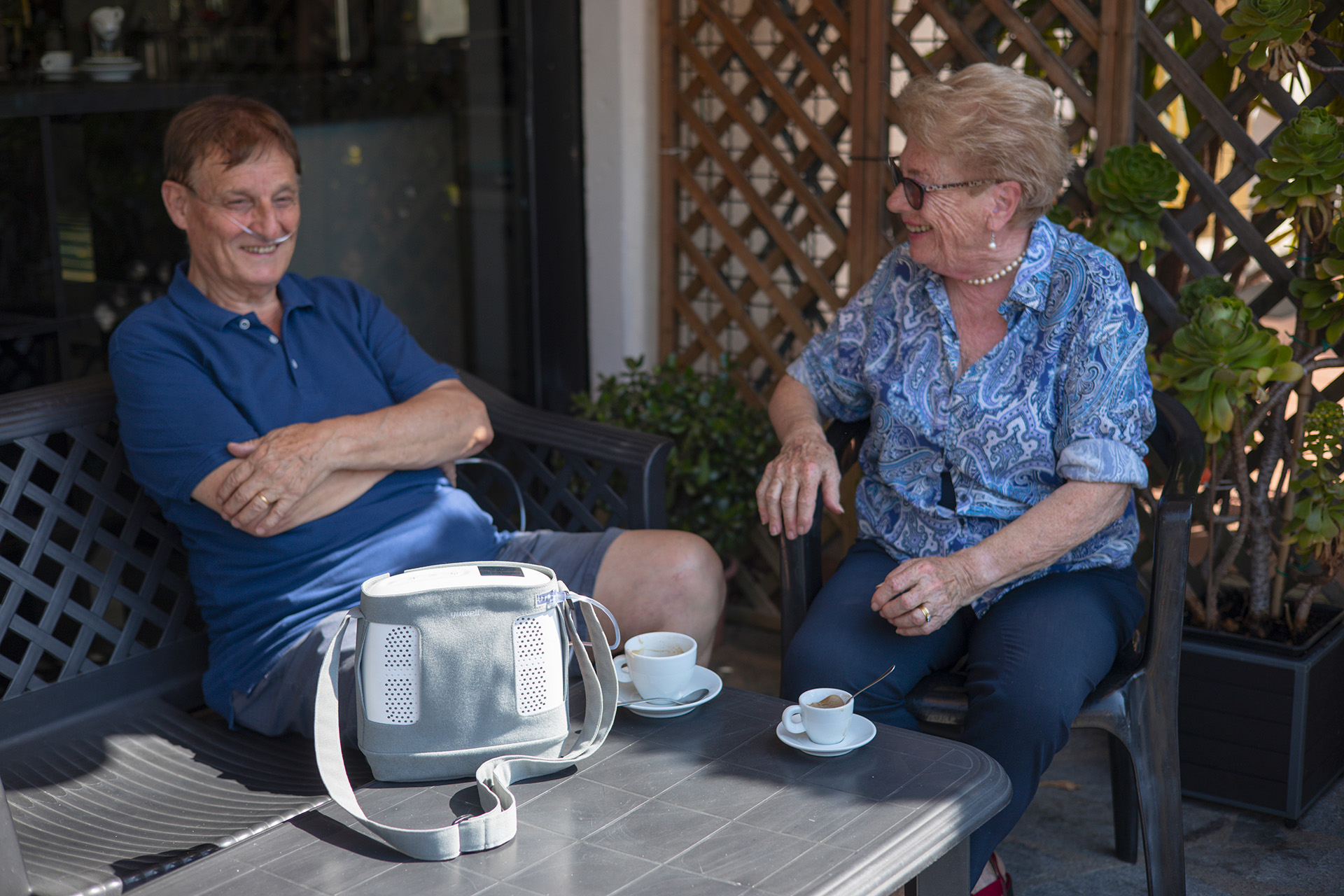
3. Weight and portability: the impact on everyday life
Portability is one of the main advantages of portable concentrators, but weight is not the only factor to consider.
A lightweight device may prove impractical if the carrying accessories are inadequate; for a comprehensive assessment, it is advisable to consider:
- the total weight of the device, including the battery;
- dimensions and ease of transport;
- availability of bags, shoulder straps or trolleys;
- ease of access to controls;
- the patient’s ability to manage the device independently.
Mobility does not depend solely on the ability to carry a concentrator, but also on how easily the patient can use it in their daily life.
This aspect is particularly important for patients with reduced mobility or who require the support of a carer.
4. The noise level of the concentrator is also a factor
Oxygen therapy may require prolonged use of the device, even for several hours a day. In such cases, the noise level can affect the comfort of the patient and of those sharing the same living space.
A concentrator intended primarily for domestic use must also be assessed in relation to the environment in which it will be placed. Noise levels, together with ease of cleaning, accessibility of controls and alarm management, all contribute to the user experience.
These are factors which, whilst not replacing therapeutic requirements, can facilitate simpler and more sustainable management of the therapy over time.
5. The concentrator must be adapted to the treatment, not the other way round
The choice of a concentrator must be based on the medical prescription and an assessment of the patient’s respiratory condition.
Oxygen requirements, delivery mode, duration of therapy and the need for oxygen whilst on the move are factors that must guide the selection of the device. In particular, the healthcare professional can assess the adequacy of oxygen delivery under the conditions specified by the therapy, taking into account, where appropriate, the behaviour of oxygen saturation during exertion.
Not all portable oxygen concentrators are suitable for all clinical needs. Similarly, the option of using a more compact device must not result in compromises regarding the prescribed oxygen therapy.
The principle is simple: it is the device that must adapt to the therapy and the patient’s needs, not the other way round.
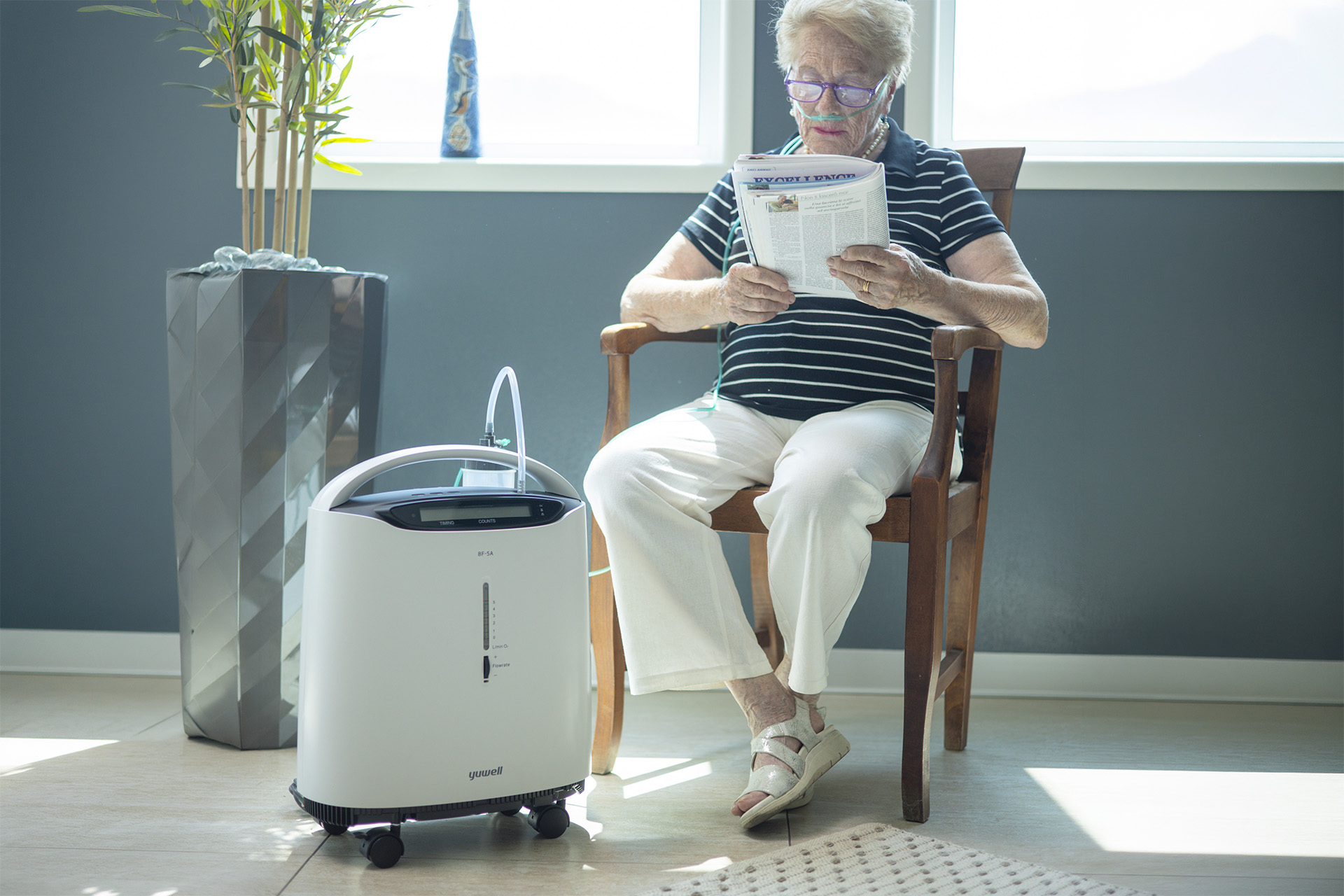
6. The role of the healthcare professional: from selection to correct management
Selecting the right oxygen concentrator is only one part of the oxygen therapy process. Once the appropriate device has been identified, it is equally important that the patient and any carers receive clear instructions on its correct use.
Training should cover the prescribed settings, power supply management, recognising alarms, the maintenance procedures specified by the manufacturer, and the main safety precautions.
Throughout this process, dialogue between the prescribing doctor, the supplier, the patient and specialist healthcare professionals can contribute to a more informed approach to managing the therapy.
For medical device suppliers, understanding the features and limitations of different oxygen concentrators also means being able to offer more comprehensive technical advice, whilst respecting the doctor’s instructions and the expertise of each professional.
Oxygen concentrators: which features should you compare?
Before choosing a device, it is worth considering the key technical specifications in relation to its intended use.
| Parameter | What to consider |
| Delivery mode | Continuous flow, pulse mode or both |
| Performance | Compatibility of flow rate and delivery mode with the prescription |
| Battery life | Battery life at the required settings |
| Portability | Weight, dimensions and carrying accessories |
| Power supply | Mains power, battery and charging options |
| Comfort | Noise level, controls and ease of use |
| Management | Maintenance, alarms and technical support |
Taken together, these factors provide a better understanding of the differences between stationary and portable oxygen concentrators and help you make a more informed decision.
The right choice starts with the individual’s needs
There is no such thing as the ‘best’ oxygen concentrator. There is, however, the most appropriate device for a given prescription and for the patient’s specific needs.
Reliability of oxygen delivery, battery life, portability and ease of use must be assessed as part of a single process, in which safety and therapeutic appropriateness always remain the top priorities.
Understanding the features of the various systems helps healthcare professionals make more comprehensive assessments and guide patients towards solutions that are compatible with their treatment and lifestyle.
Discover Moretti’s oxygen therapy solutions and explore the technical specifications of the concentrators available in the range.