




For decades, the Body Mass Index, or BMI, has been one of the most widely used tools for classifying body weight and identifying cases of overweight or obesity. Simple, quick and easy to use, BMI has long been a benchmark in clinical practice and epidemiological research.
Today, however, the scientific debate is increasingly highlighting the limitations of this indicator when used as the sole assessment criterion.
In 2025, The Lancet Diabetes & Endocrinology Commission, in its report “Definition and diagnostic criteria of clinical obesity”, proposed a new framework for defining and diagnosing obesity, calling for a move away from exclusive reliance on BMI and towards a more comprehensive approach capable of considering not only the relationship between weight and height, but also the distribution of body fat, body composition and the impact of excess body fat on a person’s health.
Why BMI alone is not enough
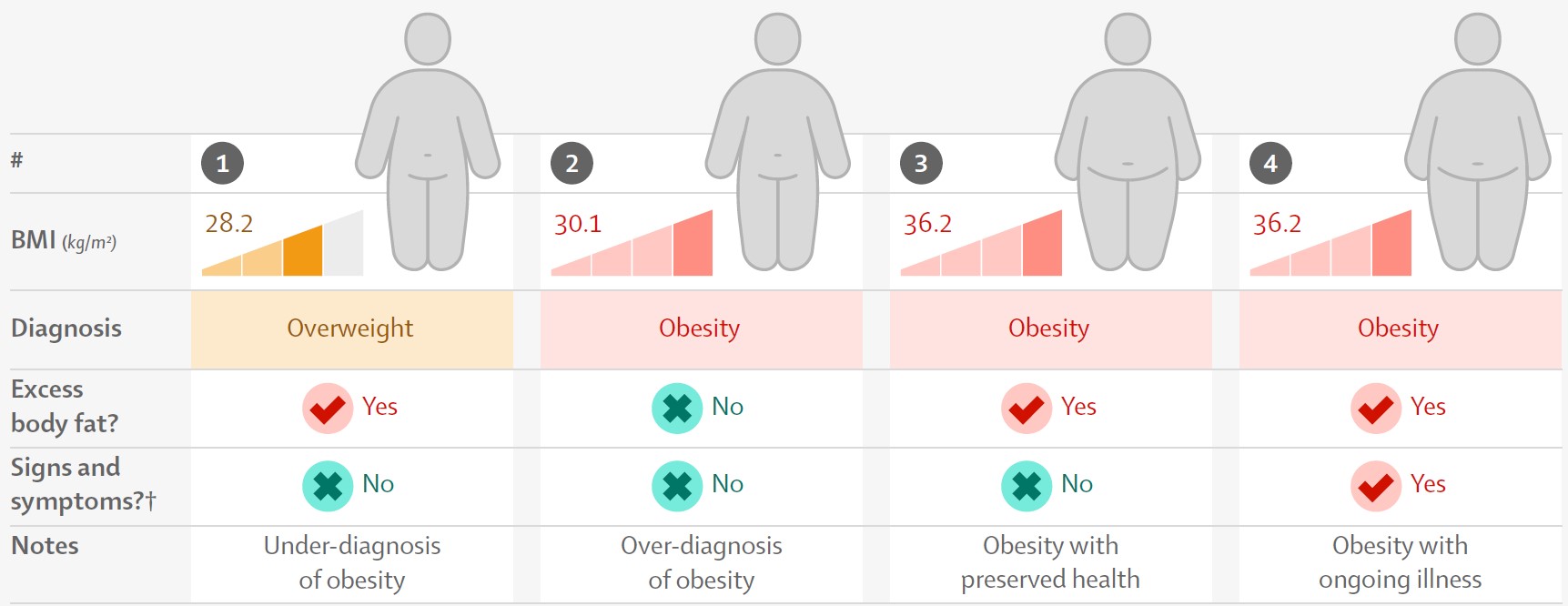
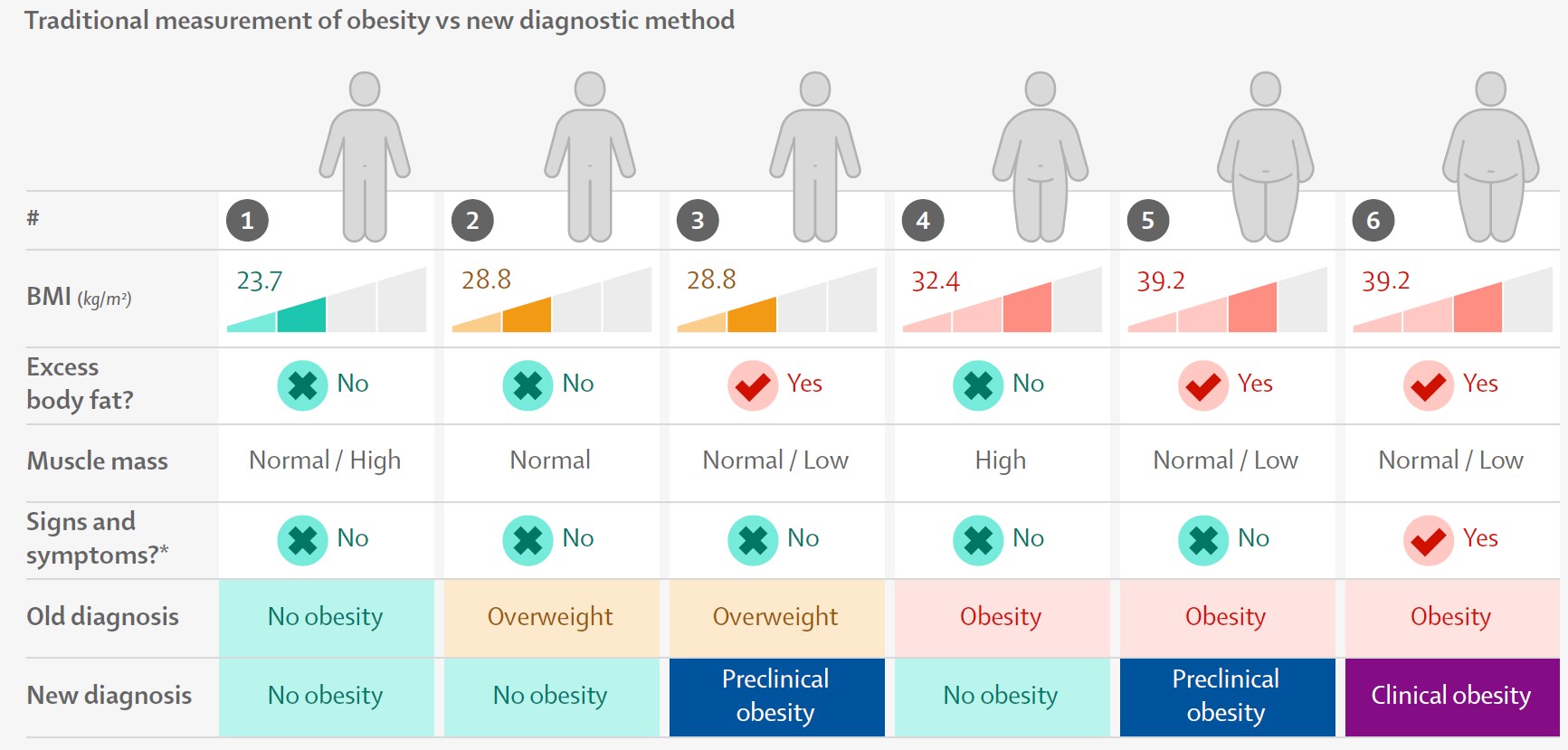
BMI is calculated by comparing weight and height, but it does not distinguish between body fat, muscle mass, body fluids and body composition. This means that two people with the same BMI may have very different physical and metabolic conditions.
An athlete, for example, may have a high BMI due to greater muscle mass, without having excess body fat. Conversely, a person with a normal BMI may have a high percentage of body fat or a more risky distribution of fat, particularly in the abdominal area.
Relying solely on BMI can therefore lead to incomplete assessments that do not always reflect a person’s actual state of health.
From weight classification to health assessment
The new approach proposed by the Commission calls for obesity to be viewed not merely as a numerical value, but as a condition to be assessed in relation to the effects that excess body fat can have on the body and on quality of life.
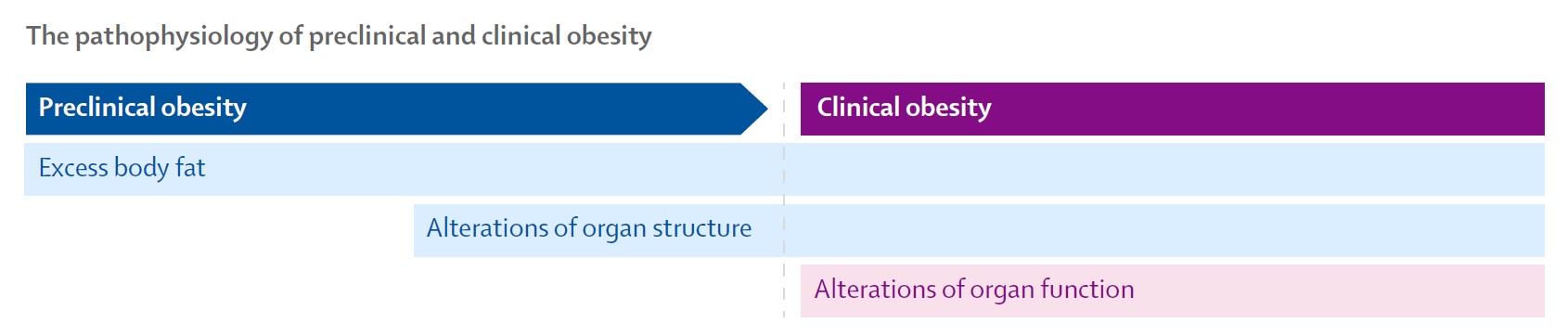
For this reason, an important distinction is being introduced between clinical obesity and pre-clinical obesity.
Clinical obesity
Clinical obesity is defined as a condition in which excess body fat is associated with signs or symptoms of impaired health, dysfunction or limitations in daily activities.
In this condition, obesity is not merely a risk factor, but a genuine clinical condition requiring targeted, multidisciplinary management tailored to the individual’s specific needs.
Pre-clinical obesity
Pre-clinical obesity, on the other hand, refers to people who have excess body fat but do not yet show obvious signs of impaired health or organ function.
In these cases, the main objective is prevention: early identification of a risk condition allows intervention before metabolic, cardiovascular, respiratory or musculoskeletal complications can develop.
A more comprehensive and personalised assessment
Moving beyond BMI does not mean doing away with it, but rather incorporating it into a broader assessment.
BMI can still be useful as an initial indicator or screening tool, but for a more accurate picture of one’s health, it is important to combine it with other parameters, such as:
- waist circumference;
- waist-to-hip ratio;
- waist-to-height ratio;
- body composition assessment;
- analysis of body fat distribution;
- observation of associated signs, symptoms and clinical conditions.
Among the tools used in a professional setting, BIA (Bioelectrical Impedance Analysis) technology can provide significant support in assessing body composition, enabling the estimation of parameters such as fat mass, lean mass and body water.
This data, interpreted by qualified professionals and integrated with clinical assessment, can help build a more comprehensive and personalised picture of the individual.
The role of body composition in professional practice
In clinical, nutritional and care settings, knowing a person’s weight is not enough to truly understand their condition. Assessing body composition allows us to look beyond the number on the scales, examining important parameters such as muscle mass, body fluids and body fat percentage.
This approach is useful in prevention programmes, nutritional monitoring, weight management and clinical follow-up. It is not just a matter of ‘measuring more’, but of measuring better.
Towards a more informed approach to obesity
The framework proposed by the Lancet Commission calls for a more nuanced, less stigmatising and more person-centred approach.
Obesity is a complex condition influenced by biological, metabolic, environmental, psychological and social factors. It therefore requires appropriate assessment tools and an approach capable of distinguishing between risk, prevention and clinical condition.
For healthcare professionals, integrating anthropometric parameters, body composition and clinical observation means offering more accurate assessments and more personalised care pathways.
For patients, it means being viewed as more than just a single number.
Conclusion
BMI remains a useful tool, but it can no longer be considered the sole parameter for defining and managing obesity at an individual level.
The new perspective proposed by The Lancet Diabetes & Endocrinology Commission calls for a paradigm shift: moving from a classification based primarily on weight to a more comprehensive assessment of health, body composition and the individual’s actual needs.
A more accurate, more informed approach that is closer to everyday clinical practice.
Inspired by Charder Medical